
Comfort & Performance
Thermostat Humidity Settings That Actually Work in Georgia Summers
Why Lowering the Temperature Is Not Enough
Every Georgia summer, homeowners fight the same losing battle: the thermostat reads a reasonable number, but the house still feels sticky and uncomfortable, so they crank it lower and lower, running up the bill without ever feeling right. The reason is simple once you see it. In our humid climate, comfort is about humidity as much as temperature, and the thermostat's temperature number only tells half the story.
The human body cools itself by evaporating sweat, and when the air is already full of moisture, that evaporation slows and you feel hotter than the thermometer says. Get the humidity right and you can feel perfectly comfortable at a higher, cheaper temperature setting. That is the key that changes everything about how you run your system in a Kennesaw summer.
The Numbers That Actually Matter
Here are the targets worth knowing. The EPA recommends keeping indoor relative humidity between 30 and 50 percent, and always below 60 percent, both for comfort and to discourage mold and dust mites. In our climate, aiming for the 45 to 50 percent range in summer is a realistic and comfortable goal.
- Indoor relative humidity: aim for 45 to 50 percent in summer, and keep it under 60 percent.
- Temperature: with humidity controlled, many people are comfortable at 74 to 78 degrees, higher than they would need in humid air.
- Outdoor dew points in a Georgia summer often sit in the high 60s, which is why the AC works so hard to keep indoor moisture down.
- A simple hygrometer, often built into smart thermostats, lets you actually see your indoor humidity instead of guessing.
Fan Setting: Auto, Not On
One setting quietly sabotages humidity control more than any other: leaving the fan on On instead of Auto. When the fan runs continuously, it keeps blowing air across the evaporator coil even after the cooling cycle ends. All the moisture that just condensed on that cold coil, water that was about to drip away down the drain, gets re-evaporated and blown right back into your house.
Set the fan to Auto so it runs only during cooling cycles. The moisture that collects on the coil then drains away as intended instead of being recycled into your rooms. This one change often makes a noticeable difference in how humid a home feels, and it costs nothing.
Let the System Run Long Enough
Dehumidification takes runtime. A system that runs in long, steady cycles wrings far more moisture out of the air than one that clicks on and off in short bursts. That is why setting the thermostat sensibly and letting the system do its job beats constantly overriding it. Long cycles are your friend in Georgia, as we cover in our guide on why your AC runs all day.
This is also why an oversized system struggles with humidity: it cools the air too fast and shuts off before removing much moisture. If your house feels cool but clammy no matter what you set, the problem may not be your settings at all but a system that satisfies the temperature before it can dehumidify. That is worth having checked.
When Settings Are Not Enough
Sometimes you do everything right, fan on Auto, sensible temperature, patience with the runtime, and the humidity still will not come down. In our climate, that is not unusual, and it points to needing more dehumidification capacity than the AC alone provides. This is common in homes with a lot of moisture load, tightly built homes, or during the muggiest stretches of summer.
The solution in those cases is a whole-home dehumidifier, which works alongside your HVAC to actively remove moisture independent of whether the AC is cooling. Unlike a small portable unit, it handles the whole house, drains automatically, and lets you dial in a target humidity. For homes that stay sticky no matter the thermostat, it is often the piece that finally makes summer comfortable.
Smart Thermostats and Humidity Control
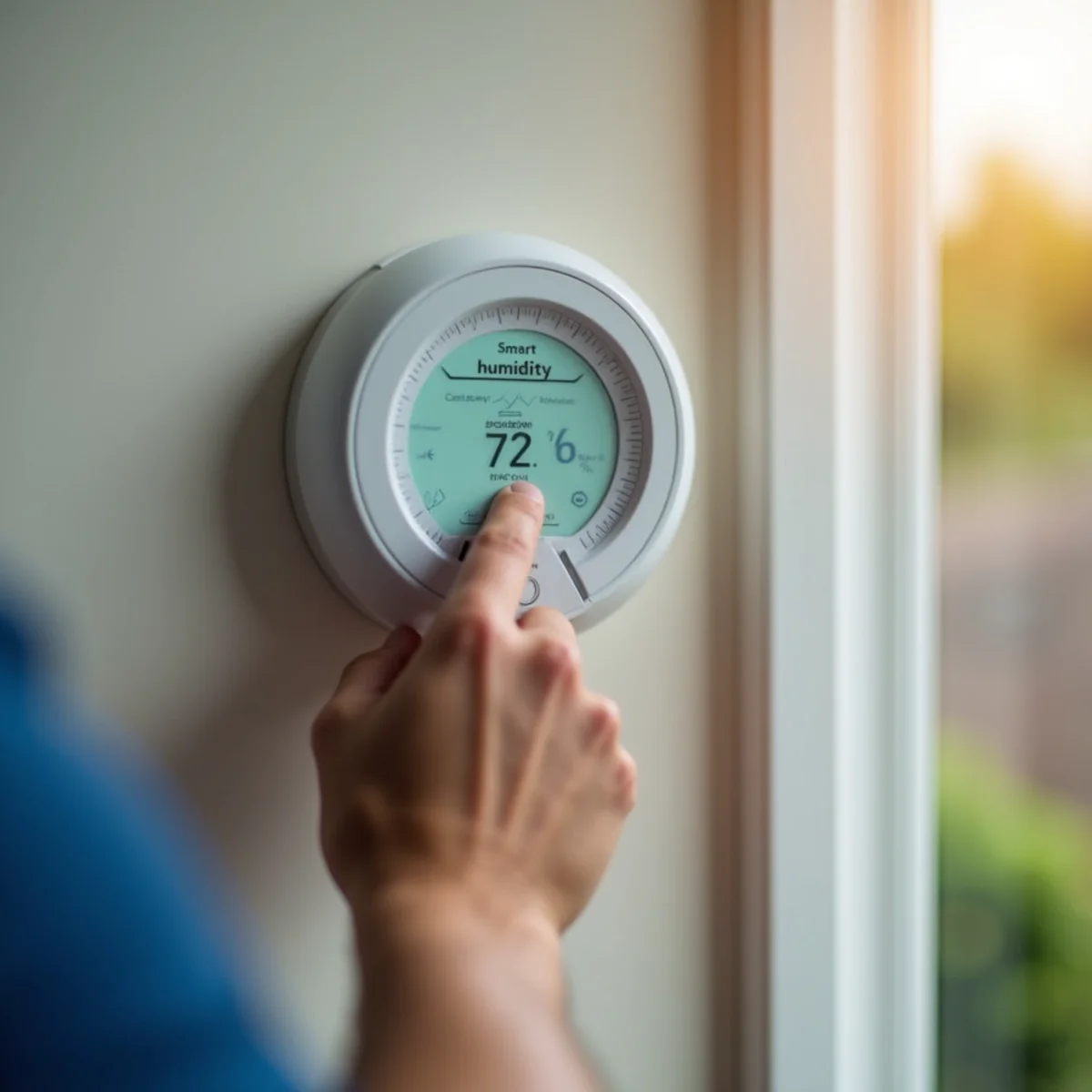
A smart or modern programmable thermostat helps in a couple of ways. Many display your indoor humidity so you can actually track it, and some can be set up to run the system in ways that favor dehumidification. Combined with zoning, a smart thermostat lets you manage comfort room by room and floor by floor rather than fighting one setting for the whole house.
The goal of all of this is the same: control the moisture, and comfort follows at a higher, more efficient temperature. Once you stop chasing comfort with the temperature dial alone and start managing humidity, Georgia summers get a lot more bearable and a lot less expensive.
Get Comfortable and Dry With HVAC Kennesaw GA
If your home stays muggy no matter how you set the thermostat, the fix may be a setting, a system issue, or added dehumidification, and we can tell you which. We diagnose humidity problems, check your system's dehumidification performance, and recommend whole-home dehumidifiers where they fit. Serving Kennesaw and the surrounding neighborhoods, we make Georgia summers comfortable. Call HVAC Kennesaw GA at +1 (327) 210-5999 to solve your home's humidity for good.
Frequently Asked Questions
What humidity level should I set for a Georgia summer?
Should my thermostat fan be on Auto or On in humid weather?
Why is my house still humid even with the AC running?
Need a hand from a local Kennesaw HVAC tech?
Same-day service across Kennesaw & Acworth — 24/7 during ice storms and heat waves.
3600 Kennesaw N Ind Pky, Kennesaw, GA 30144