
Comfort & Performance
Why Your AC Runs All Day in Georgia's Humidity (and What Right-Sizing Means)
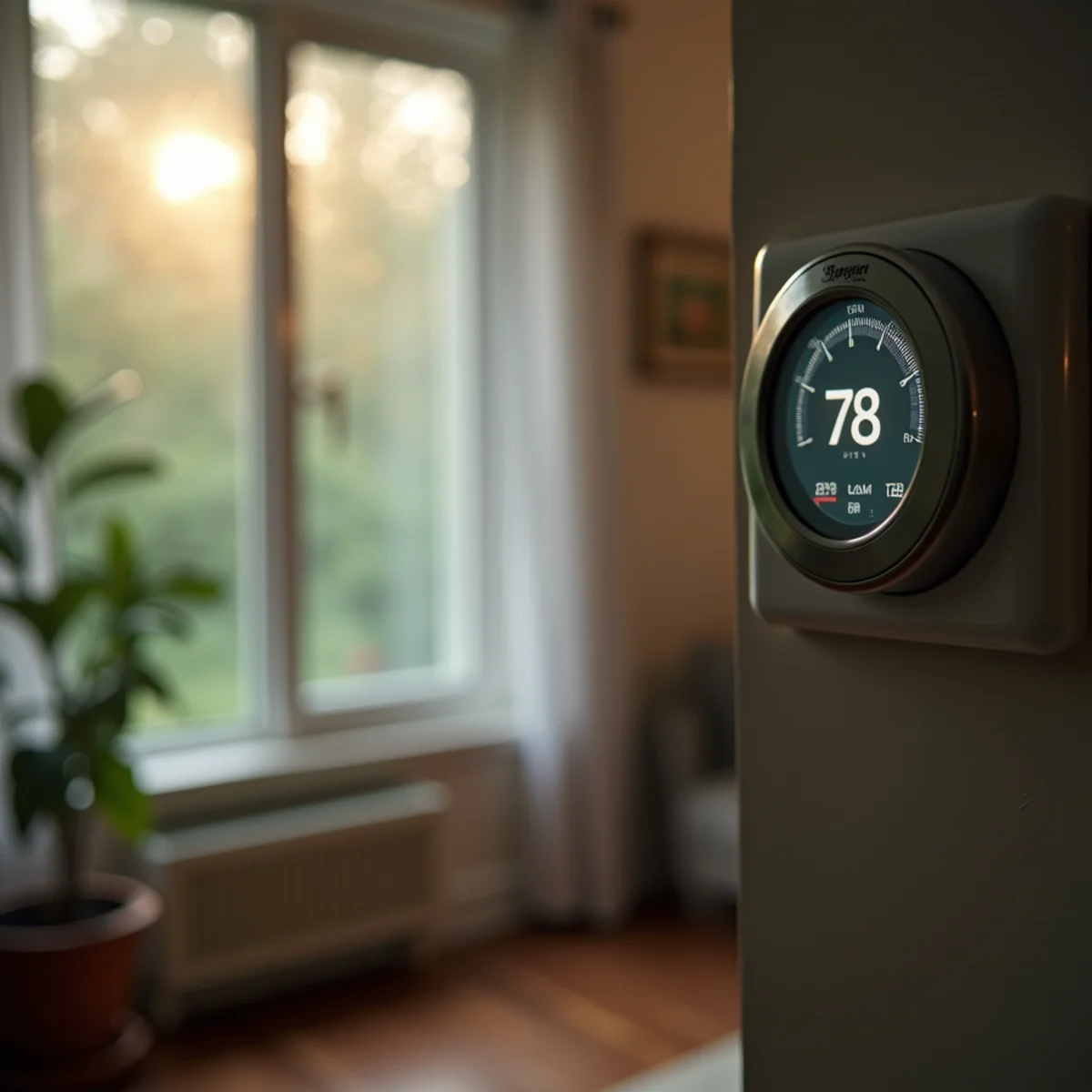
Running Nonstop Is Not Always a Problem
One of the most common worries we hear in July is that the AC seems to run all day and never shut off. It feels like something must be wrong, and sometimes it is. But in Georgia's humid climate, a long runtime is often a sign of a system doing its job correctly, and understanding the difference will save you a needless service call, or prompt one you actually need.
The key is to look at whether the house is comfortable while the system runs. An AC that runs long and keeps the home cool and dry is behaving. An AC that runs constantly and still cannot hold temperature or feels clammy is telling you something is off. Let us unpack both.
Why Humidity Makes Your AC Work Harder
Your air conditioner has two jobs, and people forget the second one. It lowers the temperature, and it removes moisture from the air. In North Georgia, where summer dew points regularly sit in the high 60s, that moisture-removal job is huge. Pulling water out of the air takes time and runtime, which is why your AC runs longer here than the same unit would in a dry climate.
A long, steady run is actually the ideal way to control humidity. The system reaches a rhythm, keeps the coil cold, and wrings moisture out of the air continuously. Short, frequent bursts do a poor job of dehumidifying. So counterintuitively, an AC that runs in long cycles is often keeping your home more comfortable than one that clicks on and off constantly.
When Long Runtime Signals a Real Problem
That said, there is a version of this that is a genuine issue: when the system runs and runs but never satisfies the thermostat, or the house feels warm or sticky despite the constant operation. That is not healthy dehumidification, that is a system that cannot keep up. Common causes include:
- A low refrigerant charge from a leak, cutting both cooling and dehumidifying capacity.
- A dirty coil or clogged filter choking airflow, common with our pine pollen.
- A failing or undersized system that cannot meet the load on the hottest days.
- Leaky ductwork dumping cooled air into an attic or crawl space instead of your rooms.
- An outdoor coil packed with debris so it cannot shed heat effectively.
The Oversizing Trap
Here is the counterintuitive part that trips up a lot of homeowners and even some installers. A bigger AC is not better in Georgia. An oversized system cools the air temperature quickly and then shuts off before it has run long enough to remove much moisture. The result is a house that hits the set temperature but still feels cold and clammy, and a system that short-cycles, wearing out its own components with constant starts and stops.
This is why the sticky-but-cool complaint is so often a sizing problem. An oversized unit satisfies the thermostat too fast to do the dehumidifying half of its job. The fix is not a colder setting, it is a system correctly matched to the home.
What Right-Sizing Actually Means
Right-sizing means matching the system's capacity to your home's actual cooling load, calculated properly rather than guessed. Technicians do this with a load calculation, which accounts for your square footage, insulation, windows, orientation, ductwork, and the local climate. The goal is a system that runs in long, steady cycles on hot days, cooling and dehumidifying together, without short-cycling or struggling.
When a system is right-sized, those long runtimes you were worried about are exactly what you want. The house stays cool and dry, the equipment runs efficiently, and it lasts longer because it is not slamming on and off all day. Bigger is not the goal; matched is.
How to Tell Which Situation You Are In
Use this simple test. If your AC runs long but the house stays at the set temperature and feels comfortable and dry, it is working the way it should in our climate, and you can relax. If it runs constantly and the house is warm, or hits temperature but feels damp and clammy, or your bills have jumped without a heat wave to explain it, something needs attention.
Keep an eye on indoor humidity too. The EPA recommends keeping it between 30 and 50 percent, and below 60. If a hygrometer reads higher than that despite the AC running, your system is not dehumidifying adequately, whether from a charge issue, an airflow problem, or oversizing. Our guide to thermostat humidity settings covers the comfort side of this in more detail.
Get a Straight Answer From HVAC Kennesaw GA
If you cannot tell whether your AC is doing its job or fighting a problem, we can measure it and tell you. We check the charge, airflow, and dehumidification performance, and we will tell you honestly whether the system is fine, needs a repair, or was oversized from the start. Serving Kennesaw and the surrounding neighborhoods, we sort out these humidity puzzles all summer. Call HVAC Kennesaw GA at +1 (327) 210-5999 for an AC performance check.
Frequently Asked Questions
Is it bad that my AC runs for hours at a time in summer?
Why does my house feel cold but clammy?
What indoor humidity should I aim for?
Need a hand from a local Kennesaw HVAC tech?
Same-day service across Kennesaw & Acworth — 24/7 during ice storms and heat waves.
3600 Kennesaw N Ind Pky, Kennesaw, GA 30144