
Kennesaw Climate & Local Conditions
Crawl-Space Moisture & Mold: The Hidden HVAC Problem Under Cobb Homes
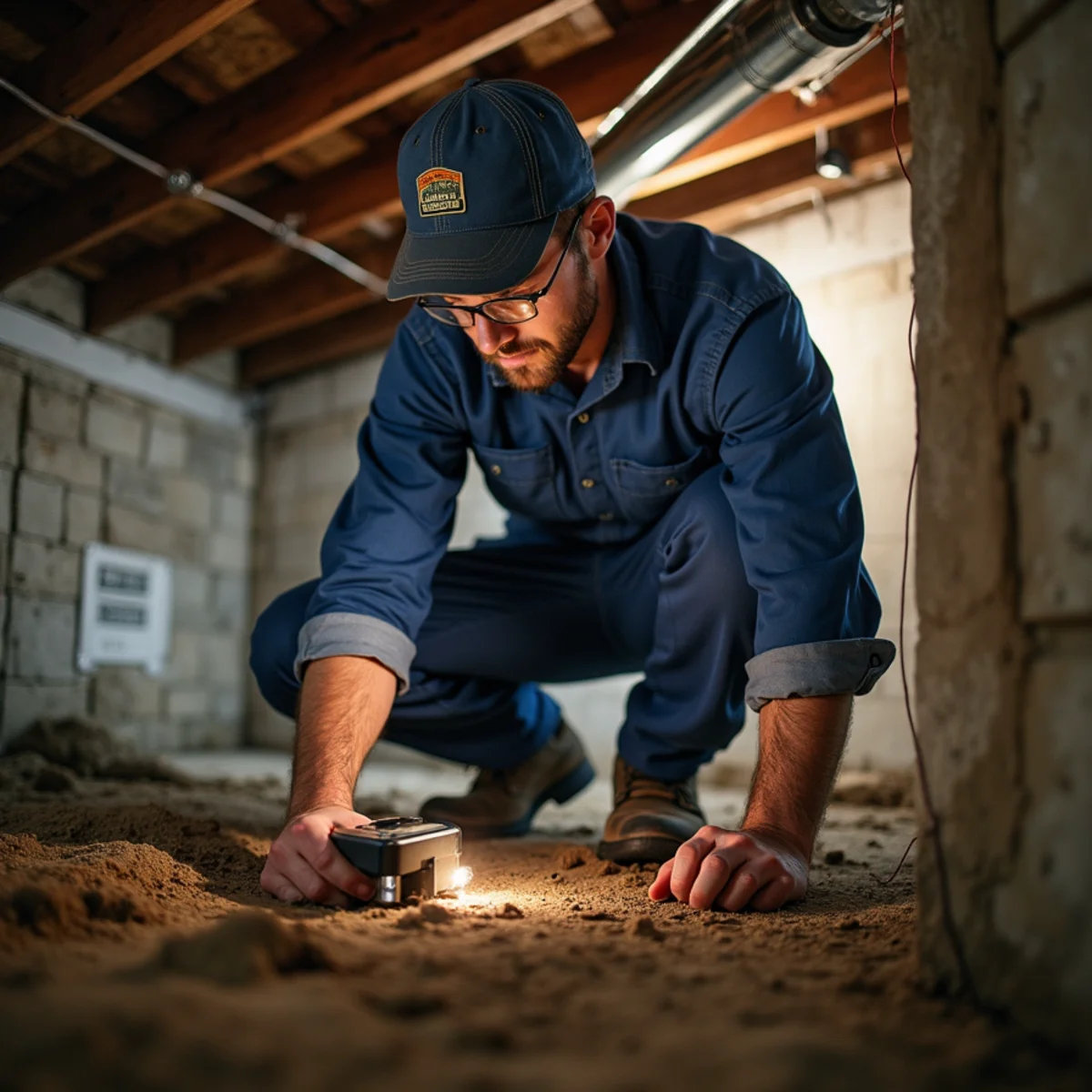
The problem you cannot see but can smell
A lot of Kennesaw and Cobb County homes sit over a vented crawl space, that low, dark area between the ground and your first floor. Most homeowners never go down there. But if your house has a musty smell that will not go away, floors that feel cool and clammy, or allergies that flare up indoors, the source is often three feet below your feet.
Georgia's humid climate makes crawl spaces a moisture trap. Damp earth, high outdoor dew points, and old-style foundation vents that let humid summer air pour in create the perfect conditions for wet wood, mold, and musty air. And because of how a house breathes, that air does not stay down there.
The stack effect: why crawl-space air ends up in your lungs
Homes breathe from the bottom up through what building scientists call the stack effect. Warm air rises and escapes through the upper floors and attic, and that creates a slight suction that pulls replacement air in from the lowest point, your crawl space. Estimates vary, but a meaningful share of the air you breathe on your main floor started in the crawl space and rose through gaps around plumbing, wiring, and the subfloor.
So a damp, musty, moldy crawl space is not sealed away from you. It is the intake for a portion of your home's air. Whatever is growing down there is part of what your family breathes.
How crawl-space moisture attacks your HVAC system
In many Cobb County homes, part of the ductwork and sometimes the air handler live in the crawl space. That puts your air distribution system right in the wettest, moldiest part of the house, and it pays a price.
- Ductwork sweats when humid crawl-space air meets cold supply air, and that condensation feeds mold on and inside the ducts.
- Duct insulation gets damp, loses its value, and starts to sag and deteriorate.
- Mold spores from the crawl space get pulled into return leaks and distributed through the house.
- Metal components rust faster in the constant moisture, shortening equipment life.
- Damp air is harder to cool and dehumidify, so your system runs longer for worse comfort.
The health and structural stakes
The EPA is clear that indoor mold is a health concern, particularly for people with asthma and allergies, and that the fix is controlling moisture. Their guidance is to keep indoor relative humidity below 60 percent and to dry wet materials within 24 to 48 hours to prevent mold growth. A chronically damp crawl space violates all of that continuously.
Beyond health, there is the house itself. Persistent moisture rots floor joists and subflooring, invites wood-destroying insects, and can cost far more to repair than the moisture control that would have prevented it. The musty smell is the cheap early warning.
Signs your crawl space is the culprit
You do not need to crawl under the house to suspect a problem. Watch for these.
- A persistent musty or earthy smell, strongest near floor vents or in first-floor closets.
- Floors that feel cool and slightly damp underfoot in summer.
- Cupping or warping hardwood floors on the main level.
- Allergy or asthma symptoms that ease when you leave the house.
- Higher-than-expected humidity readings on a main-floor hygrometer despite the AC running.
What actually fixes it
Air freshener and dehumidifier buckets do not solve a crawl-space moisture problem, they mask it. The real fix controls moisture at the source and keeps the crawl-space air out of your living space and out of your ducts.
- Seal and repair the ductwork so it is not leaking crawl-space air into your home or sweating in the humidity.
- Address the moisture source, whether that is a vapor barrier over bare earth, corrected drainage, or crawl-space encapsulation.
- Add dedicated dehumidification if the space cannot otherwise hold below 60 percent relative humidity.
- Clean or replace mold-contaminated duct insulation rather than leaving it to keep spreading spores.
Start with an honest look under your home
The right first move is an inspection that connects what is happening in the crawl space to what you are breathing and what your HVAC system is doing. HVAC Kennesaw GA can evaluate your ductwork, measure your indoor humidity, and lay out a plan that treats the cause, not just the smell. If your Cobb County home has that musty, damp signature, call us at +1 (327) 210-5999 and let us take an honest look under your floor.
Frequently Asked Questions
Can a musty smell in my house really come from the crawl space?
Should Georgia crawl-space vents be open or closed?
Will fixing my crawl space help my allergies?
Need a hand from a local Kennesaw HVAC tech?
Same-day service across Kennesaw & Acworth — 24/7 during ice storms and heat waves.
3600 Kennesaw N Ind Pky, Kennesaw, GA 30144