
Comfort & Performance
Crawl-Space Duct Problems: Moisture, Mold & Corrosion in Cobb Homes
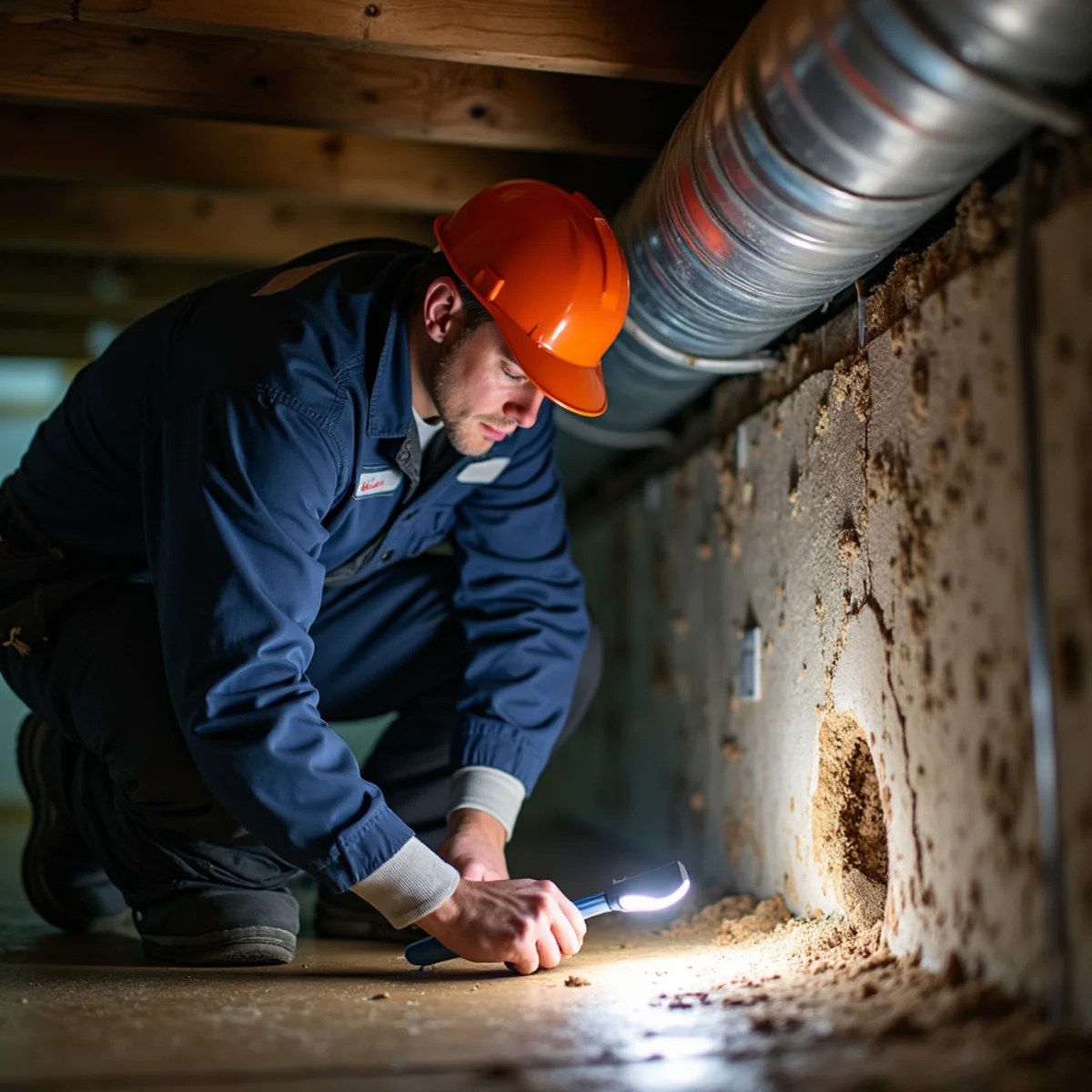
The Problems You Cannot See
A lot of Cobb County homes run their ductwork through a crawl space under the house, and out of sight tends to mean out of mind. But that crawl space is often humid, sometimes damp, and occasionally downright wet, and ductwork living in those conditions develops problems that quietly hurt your comfort, your air quality, and your energy bills for years before anyone crawls under to look.
Because you never see it, the warning signs show up indoors: musty smells, rooms that never get enough air, humidity that will not drop, and allergy symptoms that worsen when the system runs. Understanding what happens to ducts in a crawl space helps you connect those indoor symptoms to their hidden source.
Why Crawl Spaces Get So Humid
North Georgia's climate is humid to begin with, and a crawl space concentrates it. Moisture rises from bare or poorly sealed soil, humid outside air enters through vents, and any plumbing leak or poor drainage adds water directly. The result is an environment with high humidity much of the year, and in summer, when your cold ducts run through that warm, moist air, condensation forms on them the same way a cold drink sweats on a summer day.
That condensation is the root of most crawl-space duct trouble. Constant moisture on and around ductwork sets the stage for mold, corrosion, and insulation breakdown, none of which get better on their own.
Moisture, Mold, and Air Quality
When ducts sweat and the crawl space stays damp, mold and mildew find a home, and this is where it stops being just a maintenance issue and becomes an air-quality one. If your supply ducts or the air handler develop mold, your system can carry mold spores and that musty smell straight into your living space every time it runs.
- A musty or earthy smell when the heat or AC turns on.
- Allergy or respiratory symptoms that flare up indoors, especially when the system runs.
- Visible mold on duct insulation, the air handler, or crawl-space surfaces.
- Higher indoor humidity that the AC never quite brings down.
Corrosion and Physical Deterioration
Metal ductwork and equipment in a damp crawl space corrode over time. Rust eats at metal ducts, the drain pan, and connections, eventually creating leaks and holes. Duct insulation gets waterlogged, loses its R-value, and sags or falls away. The flexible ducts common in these spaces can deteriorate, tear, or come loose from their connections, sometimes dropping off entirely and dumping conditioned air into the crawl space.
Every one of those failures costs you. Leaky, disconnected ducts under the house mean you are cooling and heating the crawl space instead of your rooms, which shows up as weak airflow upstairs and higher bills. This is often the hidden partner of the airflow complaints we cover in our weak airflow guide.
How the Damp Air Gets Into Your Home
Here is the part that surprises homeowners. Ductwork is not perfectly sealed, and the return side of your system, the ducts that pull air back to be conditioned, can draw air from wherever there are leaks. If return ducts running through the crawl space have gaps, the system pulls humid, musty, potentially mold-laden crawl-space air into the airstream and distributes it through the house.
That is why crawl-space problems become indoor problems. You are not just losing conditioned air out of the supply ducts; you may be actively importing bad air from the crawl space through the returns. It is a two-way leak, and it works against both your comfort and your health.
What Actually Fixes It
The fix has two parts: address the ductwork and address the environment. On the ductwork, that means sealing leaks, reconnecting or replacing failed sections, replacing waterlogged insulation, and cleaning or replacing any duct or equipment with mold. On the environment, controlling the crawl-space moisture is what keeps the problem from coming right back.
Moisture control can involve proper drainage, a well-sealed vapor barrier over the soil, sealing or conditioning the crawl space, and in some homes a dedicated dehumidifier. The EPA guidance to keep indoor relative humidity below 60 percent, and to dry wet materials within a day or two, applies under the house too. We diagnose which combination your home needs rather than selling a one-size solution, and a proper ductwork evaluation is the starting point.
Clear the Air With HVAC Kennesaw GA
If your home smells musty when the system runs, some rooms never get enough air, or you suspect what is under the house is affecting what you breathe, we will get under there and find out. We evaluate crawl-space ductwork, seal and repair what needs it, and address the moisture that caused the problem. Serving Cobb County neighborhoods like Country Creek and beyond, we solve these hidden problems at the source. Call HVAC Kennesaw GA at +1 (327) 210-5999 for a ductwork and crawl-space evaluation.
Frequently Asked Questions
Why does my house smell musty when the AC or heat runs?
Can crawl-space duct problems affect my air quality?
How do I stop crawl-space duct problems from coming back?
Need a hand from a local Kennesaw HVAC tech?
Same-day service across Kennesaw & Acworth — 24/7 during ice storms and heat waves.
3600 Kennesaw N Ind Pky, Kennesaw, GA 30144