
Emergency & Urgent Repairs
Spring Thunderstorm & Hail Damage: Post-Storm Condenser Checklist
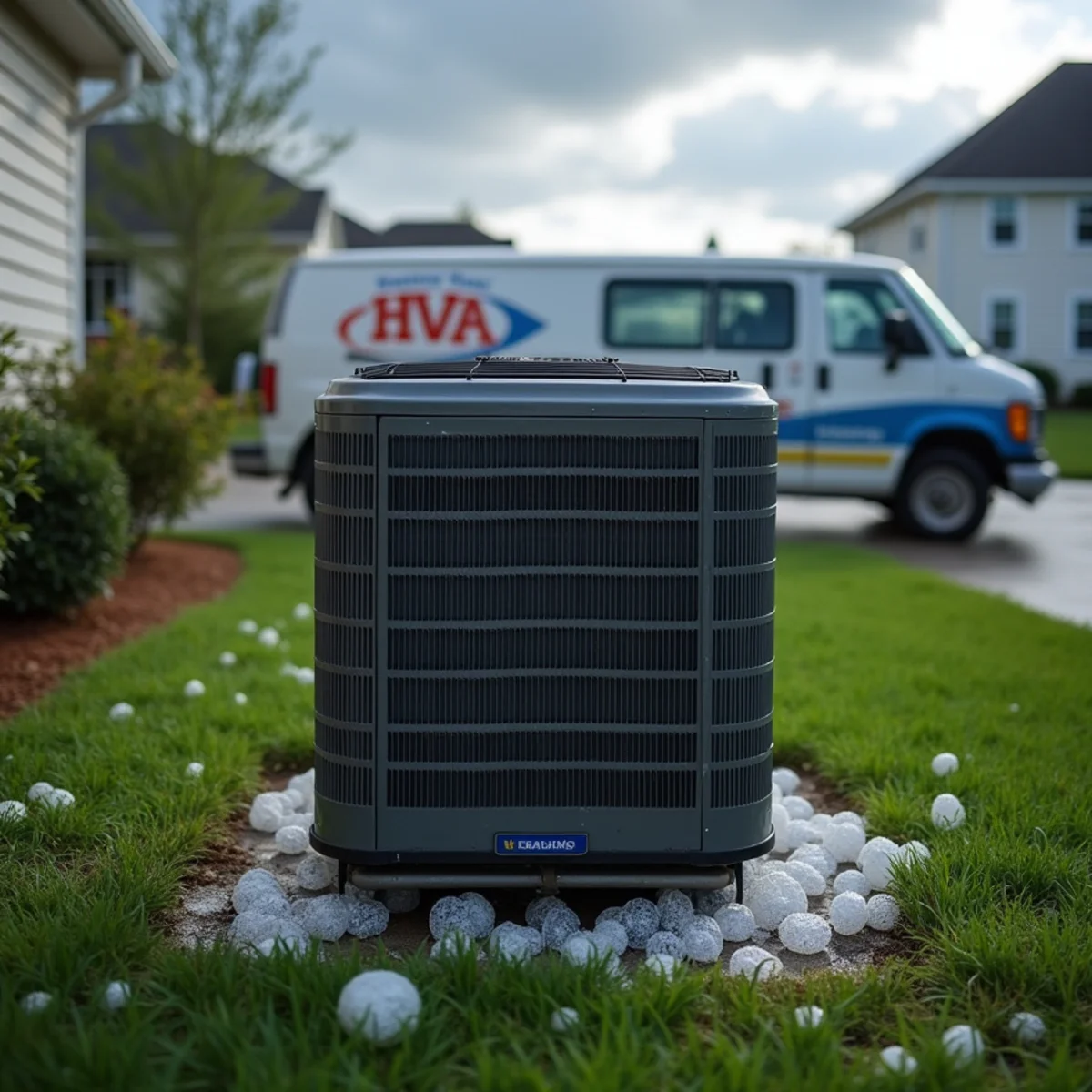
Why Hail Is Hard on Your Outdoor Unit
North Georgia springs bring the kind of storms that drop hail without much warning. Those stones land on the one piece of your HVAC system that lives outside with no shelter: the condenser, the boxy outdoor unit that dumps heat from your home. West Cobb sits right in the path of a lot of these spring cells, and after a rough storm we get calls from homeowners who are not sure whether their unit took real damage.
The tricky part is that hail damage is often invisible until the first hot week of summer, when the system suddenly cannot keep up. Walking through this checklist right after a storm, while the damage is fresh and easy to document, protects both your comfort and any insurance claim you might file.
Safety First Before You Inspect
Do not start poking at the unit while the storm is still active or while the ground around it is standing water near electrical connections. Wait for the weather to clear. Before you touch the condenser, switch it off at the outdoor disconnect box on the wall nearby and at the breaker, so the fan cannot start while your hands are near the fins.
If you see a downed power line anywhere near the unit, or scorch marks and exposed wiring, stop. That is a call to make from a safe distance, not something to inspect up close.
The Coil Fin Check
The outer skin of the condenser is a grid of thin aluminum fins wrapped around the coil. Their whole job is to shed heat, and they do it by letting air pass through. Hail flattens and bends these fins, and a badly matted section chokes airflow across that part of the coil.
- Look around all sides of the unit for dented, flattened, or caved-in areas of fin.
- Note how much of the surface is affected. A few dinged fins are minor; a whole side mashed flat is not.
- Do not try to comb the fins straight yourself with a screwdriver, since that punctures the coil. A technician uses a proper fin comb.
- Check that the protective outer grille or cabinet panels are not pushed into the fan blades.
Look for Debris and Impact Damage
Hail rarely falls alone. The same storm that dropped ice usually stripped pine straw, leaves, small branches, and roofing grit into the yard, and a lot of it ends up packed against or inside the condenser. Debris lodged in the coil acts like the flattened fins, blocking the airflow the system needs to shed heat.
Lift the top grille only if you are comfortable and the power is off, and look for debris resting on the fan blades or the coil below. Check the fan blades themselves for cracks or bends from impact, because a blade knocked out of balance will vibrate and wear out the motor bearings over time. Around West Cobb's wooded lots off Dallas Highway and Macland Road, we pull a lot of storm debris out of coils every spring.
The Refrigerant Line and Electrical Check
Two copper lines run from the condenser toward the house. The larger one is usually wrapped in black foam insulation. Hail and flying debris can crack that insulation or, worse, kink or dent the line itself. A damaged refrigerant line is not something to ignore, since it can leak refrigerant slowly and leave you with a system that cannot cool by July.
Look also at the electrical whip and the disconnect box for cracked covers or water intrusion. If you see oily residue anywhere on the lines or the base of the unit, that is a sign of a refrigerant leak and needs a technician, because refrigerant handling requires EPA certification and is not a DIY repair.
Test, Document, and Decide
If the unit looks mechanically intact and you found no exposed wiring, restore power and run the cooling for a short cycle. Listen for new grinding, rattling, or a fan that will not spin up smoothly. Feel whether the air from the vents is actually cooling. A unit that runs but cannot keep up on a warm day may have hidden coil or refrigerant damage.
Either way, take clear photos of any dents, debris, and damaged lines now. If you later file a homeowners insurance claim, that documentation matters, and a professional inspection report carries weight with an adjuster. When in doubt, have it looked at before summer arrives rather than after the system quits on the hottest day.
Get a Post-Storm Inspection From HVAC Kennesaw GA
A hail-battered condenser does not always fail right away, which is exactly why so many homeowners get caught off guard weeks later. If a spring storm hit your West Cobb home and you want a straight answer on whether your AC took damage, we will inspect it, document what we find, and tell you honestly whether it needs repair now or just a cleanup. Call HVAC Kennesaw GA at +1 (327) 210-5999 to schedule a post-storm AC inspection before the heat sets in.
Frequently Asked Questions
Can I straighten bent condenser fins myself after hail?
Will hail damage show up right away?
Does homeowners insurance cover hail damage to an AC unit?
Need a hand from a local Kennesaw HVAC tech?
Same-day service across Kennesaw & Acworth — 24/7 during ice storms and heat waves.
3600 Kennesaw N Ind Pky, Kennesaw, GA 30144